Whitepaper · 1 min read · Sep 2026
Your Accreditor's Recognition Is Your Problem Too
Accreditation risk does not stop with your institution. This whitepaper explains what CHEA recognition means, how it differs from U.S. Department of Education recognition, why accreditor standing matters, and why quality leaders should understand the recognition behind the organizations that evaluate their own institution.
- Format
- PDF
- Read time
- About 1 minute
- Published
- September 2026
- Lifecycle
- Quality & Accreditation
What is inside
- Why CHEA does not accredit institutions directly, but recognizes the organizations that do.
- The important difference between CHEA recognition and U.S. Department of Education recognition.
- What CHEA examines across academic quality, student achievement, accountability, transparency, and accreditor governance.
- Why an accreditor’s recognition status is not permanent and why changes can matter to institutions.
- Why quality leaders should understand both accreditor standing and the evidence their own institution can produce on demand.
Who it is for
Provost / VPAA
This is not an accreditation standards guide. It explains why institutions should understand who recognizes their accreditor, what that recognition covers, and how evidence readiness protects institutional confidence when external oversight changes.
Before you download
Is this whitepaper free?
Yes. It is free to download. We ask for a work email so we can send the file and, if you opt in, related research. There is no paywall or sales call attached to the download.
Who is it written for?
It is written for U.S. quality assurance, accreditation, institutional effectiveness, compliance, and academic leaders who need to understand not only their institution’s accreditor, but also the recognition structure behind that accreditor.
Does CHEA accredit universities directly?
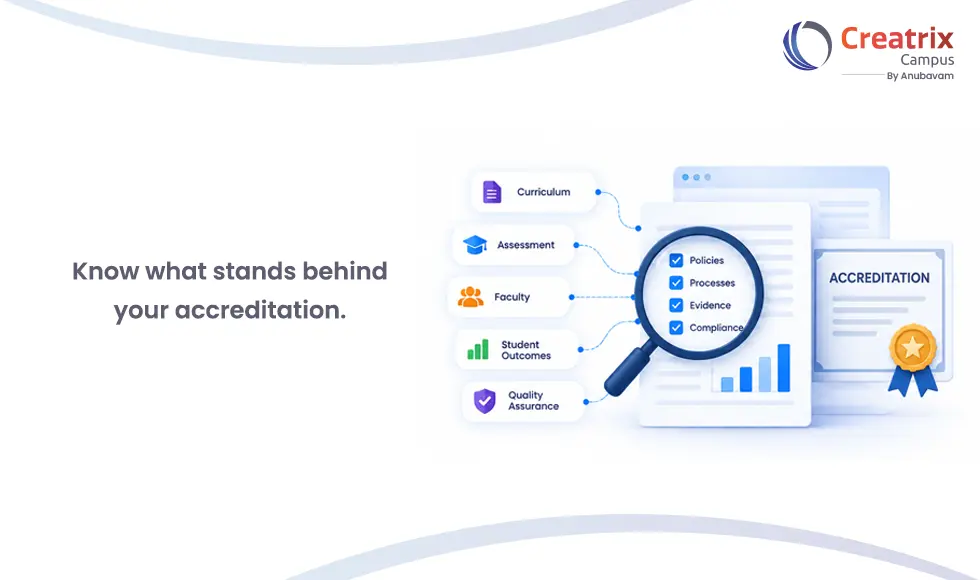
No. CHEA recognizes accrediting organizations rather than accrediting institutions itself. The paper also explains why CHEA recognition should not be confused with U.S. Department of Education recognition, which serves a different purpose. The paper also makes the practical connection back to institutional evidence. Regardless of which accreditor or recognition body is involved, institutions are better prepared when curriculum decisions, assessment outcomes, faculty records, and student outcomes are captured through everyday operations rather than reconstructed before review.