Whitepaper · 1 min read · Sep 2026
OAAA Accreditation Is a Cycle, Not a Certificate
OAAA accreditation does not end when a certificate is issued. This whitepaper explains the two-stage institutional process, five possible outcomes, program accreditation, reassessment, fees, and why Omani institutions need continuous evidence readiness when the consequences of falling short can escalate very quickly over time.
- Format
- PDF
- Read time
- About 1 minute
- Published
- September 2026
- Lifecycle
- Quality & Accreditation
What is inside
- The difference between OAAA institutional accreditation and program accreditation, and what each one is designed to assess.
- How Institutional Quality Audit and Institutional Standards Assessment form the two stages of institutional accreditation.
- The five possible outcomes, from accreditation through conditional accreditation, probation, reassessment, and termination.
- How program accreditation adds its own standards, criteria, review process, and escalation path.
- Why institutions need continuous evidence readiness rather than rebuilding documentation whenever the next review approaches.
Who it is for
QA & Accreditation
This is not an OAAA application checklist. It explains why accreditation in Oman requires continuous evidence readiness across audits, standards assessment, program review, reassessment, and the institutional decisions that follow each outcome.
Before you download
Is this whitepaper free?
Yes. It is free to download. We ask for a work email so we can send the file and, if you opt in, related research. There is no paywall or sales call attached to the download.
Who is it written for?
It is written for quality assurance, accreditation, institutional effectiveness, academic, and programme leaders in Oman who are responsible for maintaining institutional or program-level accreditation readiness.
Does this whitepaper only cover institutional accreditation?
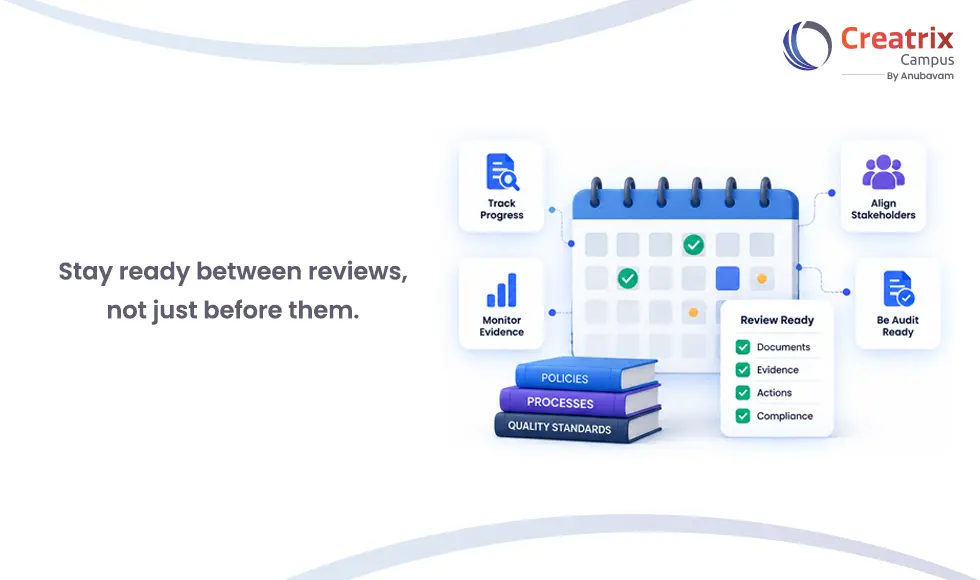
No. It explains both institutional and program accreditation. It also covers the two-stage institutional process, possible accreditation outcomes, reassessment, program standards, timelines, and the published fee structure included in the source. The practical message is that accreditation readiness should not begin when a review date appears on the calendar. The paper argues for evidence being captured continuously through curriculum, assessment, and faculty activity so the next self-study is built from records that already exist.