Whitepaper · 1 min read · Sep 2026
Most Accreditation Software Digitizes the Fire Drill
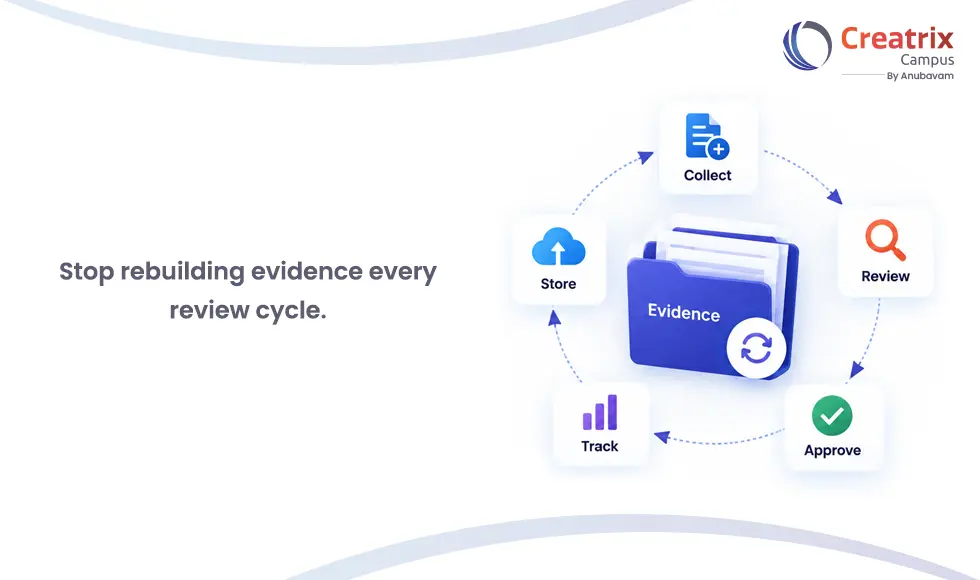
Accreditation software can centralize documents and automate reminders without fixing the problem: institutions still rebuild evidence for every review. This whitepaper shows what changes when standards, workflows, records, and evidence stay connected, so readiness becomes part of daily work rather than another fire drill.
- Format
- PDF
- Read time
- About 1 minute
- Published
- September 2026
- Lifecycle
- Quality & Accreditation
What is inside
- Why accreditation remains painful when institutions still rebuild their case for quality from scratch every review cycle.
- The difference between software that simply stores evidence and a system where evidence already exists because academic work produced it.
- What real efficiency looks like through traceable evidence, clear ownership, standards mapping, and real-time visibility.
- Six questions institutions should ask when evaluating accreditation technology, covering standards, adaptability, adoption, security, integration, and institutional insight.
- Why connecting accreditation work to everyday academic operations can reduce the recurring scramble before a self-study or review.
This is not a software feature list. It explains why digitizing accreditation can preserve the fire drill, and what changes when evidence is generated through daily academic work rather than assembled later.
Before you download
Is this whitepaper free?
Yes. It is free to download. We ask for a work email so we can send the file and, if you opt in, related research. There is no paywall or sales call attached to the download.
Who is it written for?
It is written for accreditation, quality assurance, institutional effectiveness, academic, and technology leaders who want to reduce the recurring effort of collecting, checking, and rebuilding evidence before every accreditation review.
Does this mean document repositories and workflow tools are not useful?
No. Centralized documents, notifications, and workflows are real improvements. The paper argues that they do not solve the deeper problem if evidence still has to be assembled specifically for every review. The bigger shift is connecting standards and evidence to the academic work that produces them in the first place. The paper also gives leaders a practical evaluation test: look beyond storage and ask whether the system understands accreditor standards, connects with existing institutional systems, protects sensitive data, adapts as requirements change, and turns stored information into useful insight.