Whitepaper · 1 min read · Sep 2026
Compliance Isn't a Policy. It's Who Has Access
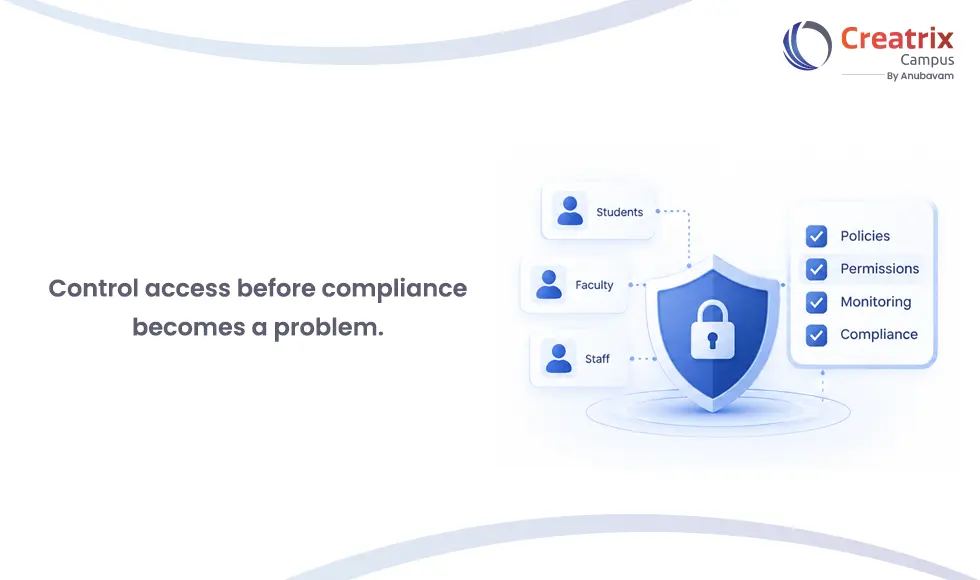
Privacy compliance breaks down when institutions can state the policy but cannot prove who accessed a record, why, or when permissions changed. This whitepaper shows how governed identity, role, permission, and audit controls turn privacy obligations into something institutions can demonstrate, not reconstruct manually.
- Format
- PDF
- Read time
- About 1 minute
- Published
- September 2026
- Lifecycle
- Platform & Data/AI
What is inside
- The operational question every privacy law eventually asks: who had access, why, and can the institution prove it?
- How GDPR, FERPA, UAE Federal PDPL, India DPDP Act, and Malaysia PDPA converge around access governance.
- Where privacy policies and point tools break down through lingering access, fragmented logs, manual requests, and informal role changes.
- What governed access looks like across identity, role, permission, audit, approvals, temporary access, and authentication.
- Why identity and access work better as a foundation across institutional systems than as a separate compliance add-on. The paper specifically compares the regulatory context across the European Union, United States, UAE, India, and Malaysia , then traces the common operational requirement back to knowing and proving who can access what.
This is not a privacy-policy checklist. It explains why compliance depends on governed access beneath institutional systems, connecting identity, roles, permissions, audit trails, approvals, and time-bound access across university operations and decisions.
Before you download
Is this whitepaper free?
Yes. It is free to download. We ask for a work email so we can send the file and, if you opt in, related research. There is no paywall or sales call attached to the download.
Who is it written for?
It is written for university IT, privacy, compliance, governance, and security leaders responsible for controlling access to institutional data and proving that those controls actually work when questioned.
Does this replace legal or compliance review?
No. The paper is clear that legal and compliance teams still own the interpretation of each law. The issue it addresses is whether the systems underneath them can produce the access evidence those teams need, without reconstructing it by hand.