Whitepaper · 1 min read · Sep 2026
Aligning Curriculum with Outcomes
Curriculum alignment looks complete when the mapping document is finished, but the real test is whether it still holds months later. This whitepaper shows how institutions can connect outcomes, assessment, industry input, and evidence so curriculum stays aligned as teaching, skills, and expectations change.
- Format
- PDF
- Read time
- About 1 minute
- Published
- September 2026
- Lifecycle
- Assessment & OBE
What is inside
- Why curriculum alignment often weakens after the original mapping exercise is complete.
- How to build a competency-first framework connecting course, programme, and institutional outcomes.
- How curriculum audits and skills-gap analysis reveal gaps, redundancy, and outdated content.
- Why assessment needs to move beyond grades toward demonstrated competency and mastery.
- A five-step roadmap to Audit, Map, Reassess, Embed, and Evolve curriculum using ongoing evidence. The whitepaper moves from the problem of static curriculum maps into a practical framework covering competency design, curriculum auditing, mastery-based assessment, employer input, and continuous outcome data. The implementation roadmap then turns this into five clear stages: Audit, Map, Reassess, Embed, Evolve
Who it is for
Provost / VPAA
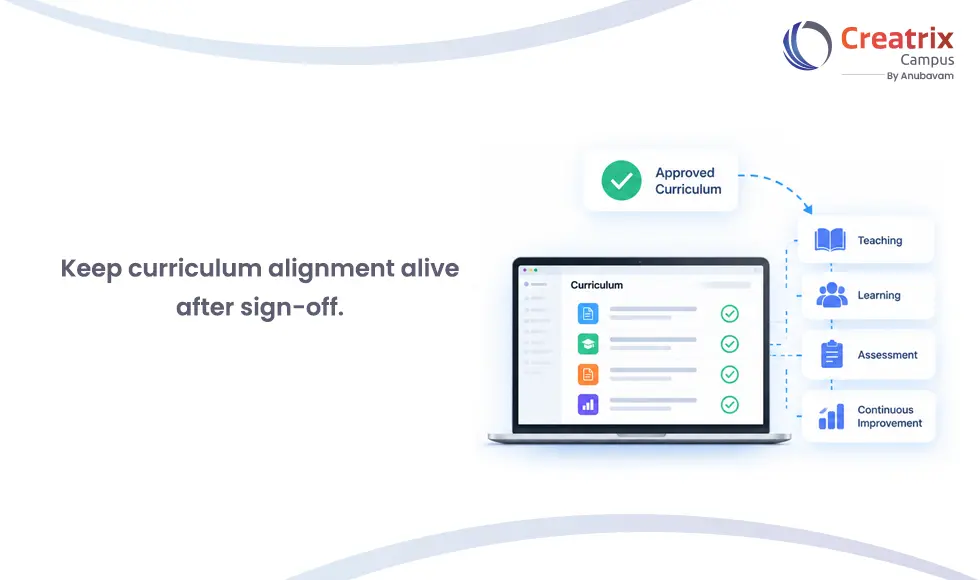
This is not a curriculum mapping guide. It explains how alignment stays alive after the map is approved, connecting competencies, assessment, employer input, attainment data, and accreditation evidence through everyday academic work.
Before you download
Is this whitepaper free?
Yes. It is free to download. We ask for a work email so we can send the file and, if you opt in, related research. There is no paywall or sales call attached to the download.
Who is it written for?
It is written for Deans, academic heads, curriculum leaders, programme teams, assessment leaders, and quality teams responsible for keeping curriculum, learning outcomes, assessment, and accreditation evidence aligned over time.
Is this mainly about creating a curriculum map?
No. The paper starts with the problem that many institutions already have a map. The harder issue is keeping that alignment current as assignments change, employer expectations shift, outcome data emerges, and accreditation evidence needs to be produced.