
Whitepaper · 1 min read · Oct 2026
Your SIS Was Never Built to Lead Transformation
Digital transformation stalls when new tools sit on top of a core built only to record what already happened. This whitepaper explains why universities need a system of operation that connects workflows, enforces policy, surfaces risk, and turns institutional data into timely action consistently.
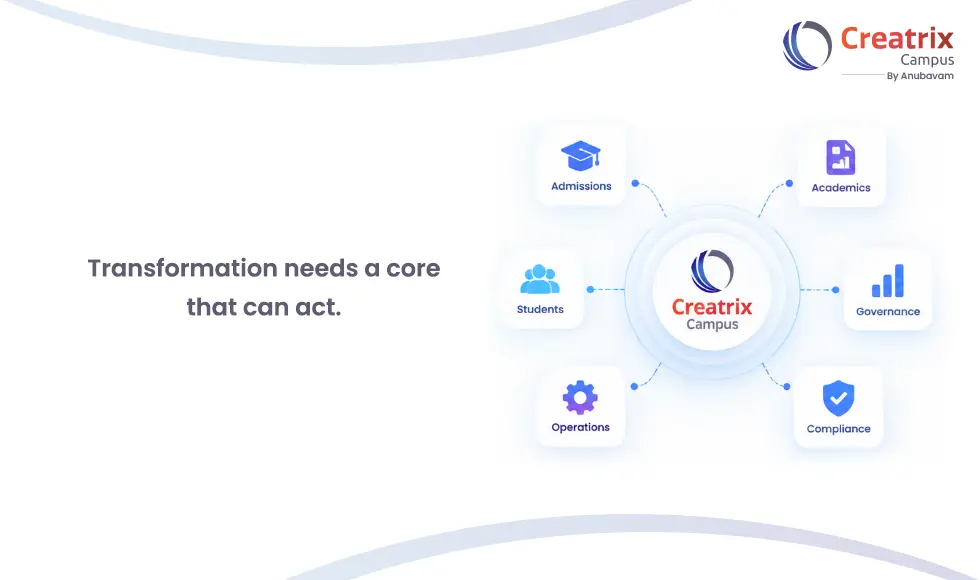
What is inside
- Why digital transformation can stall even when institutions keep adding new technology.
- The difference between a system that records what happened and one that governs what happens next.
- Six signs that the institutional core is holding transformation back.
- A five-stage maturity model from siloed operations to intelligence-driven decision-making.
- Why AI readiness depends on connected data, real-time policy enforcement, and operational intelligence beneath the dashboard.
Who it is for
This is not an SIS replacement guide. It explains why transformation depends on a core that can govern decisions, enforce policy, connect workflows, surface risk, and turn institutional records into operational intelligence.
Before you download
Is this whitepaper free?
Yes. It is free to download. We ask for a work email so we can send the file and, if you opt in, related research. There is no paywall or sales call attached to the download.
Who is it written for?
It is written for CIOs, institutional leaders, Registrars, Provosts, and transformation teams assessing whether the technology underneath their digital initiatives can actually support connected academic operations and decision-making.
Is this whitepaper arguing that universities should simply replace their SIS?
No. The paper makes a different point. A SIS still has an important role as the system of record. The question is whether the institutional core can also enforce policy, connect decisions across systems, surface risk early, and support operations in real time. The paper also includes a five-stage maturity model: Siloed, Centralized, Integrated, Policy-Aware, and Intelligence-Driven, giving leaders a way to think about where their institution currently sits.