
Whitepaper · 1 min read · Sep 2026
Why Class Scheduling Still Breaks Every Term
Class scheduling keeps breaking when institutions carry old assumptions into new terms and leave ownership of tradeoffs unclear. This whitepaper explains how capacity, faculty availability, rooms, prerequisites, and student needs collide, and what changes when scheduling starts from constraints with clear institutional decision ownership.
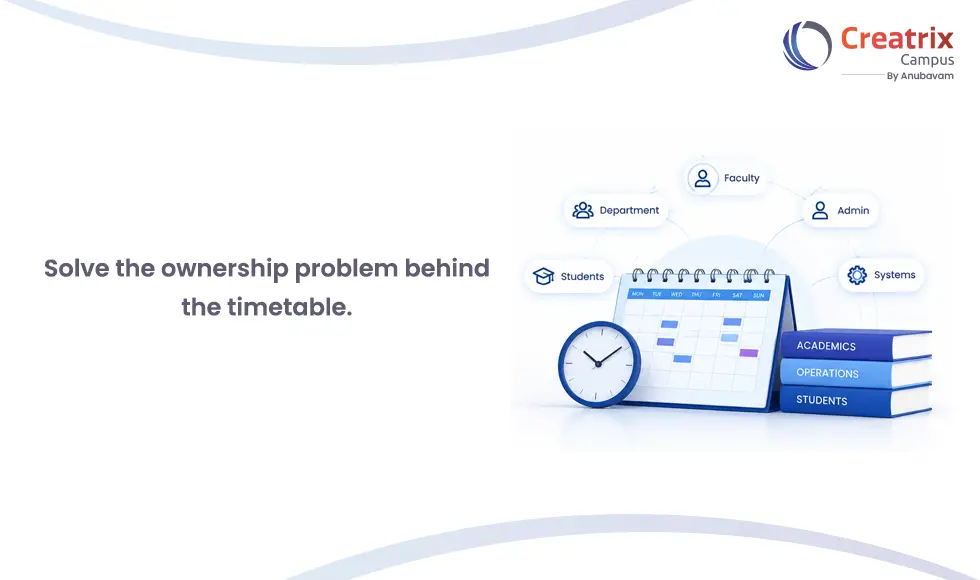
What is inside
- Why copying last year’s timetable carries outdated assumptions into a term with different student demand.
- The recurring tensions between capacity, faculty availability, room use, shared courses, travel time, and prerequisites.
- Why many scheduling failures are really ownership problems rather than software problems.
- What a better process looks like when schedules are built from current constraints instead of an old grid.
- How clearer decision ownership can resolve conflicts before registration opens and reduce disruption for students.
Who it is for
This is not a timetable optimization guide. It explains why scheduling failures are often ownership failures, and how clearer decision rights can turn competing constraints into a more reliable academic operations process.
Before you download
Is this whitepaper free?
Yes. It is free to download. We ask for a work email so we can send the file and, if you opt in, related research. There is no paywall or sales call attached to the download.
Who is it written for?
It is written for Registrars, academic operations teams, Deans, department leaders, and scheduling teams responsible for balancing student demand, faculty availability, rooms, prerequisites, and institutional priorities each term.
Is this mainly about choosing better scheduling software?
No. The paper argues that better software alone does not fix unclear decision ownership. The bigger question is who decides when faculty preferences, room capacity, student needs, and academic constraints conflict.